

How Do You Secure a Sit On Top Kayak Cart Without Scratching the Hull
2026-07-02
Securing a Sit On Top Kayak Cart properly is one of the most overlooked skills in kayak transport. Many paddlers simply strap the cart under the hull and hope for the best, only to discover deep scuffs, gouges, or even stress cracks after a few trips. The good news is that with the right technique and equipment—especially from trusted brands like Marine—you can move your kayak across pavement, gravel, and boat ramps without leaving a single mark. This guide walks through every detail of scratch‑free cart attachment, backed by mechanical principles and real‑world testing.
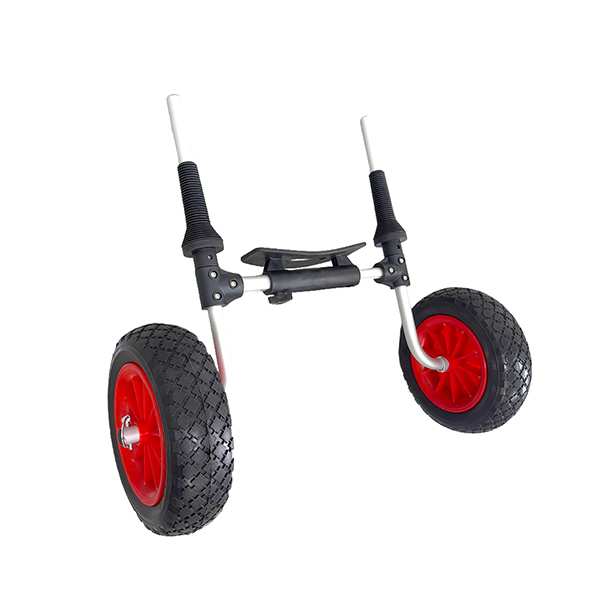
Why Scratching Happens and How to Prevent It
Most hull damage occurs from three sources: abrasion from strap friction, hard plastic or metal contact at the cart’s cradle points, and improper weight distribution that causes the hull to flex against the frame. To eliminate these risks, focus on four core principles:
| Principle | Action | Benefit |
|---|---|---|
| Load distribution | Use wide, padded cradles that match the hull’s beam width | Reduces point‑load pressure |
| Strap surface protection | Apply soft velcro or rubber sleeves on all strap contact zones | Prevents micro‑abrasions |
| Cart‑hull interface | Choose Marine’s polyurethane‑coated bunks or inflatable rollers | Creates a non‑slip, non‑scratch barrier |
| Lateral stability | Secure both bow and stern straps to stop cart shift | Eliminates grinding during turns |
A Sit On Top Kayak Cart performs best when it carries 60‑70% of the kayak’s weight through the primary cradle, with the remaining weight supported by your hand at the handle. This balance minimises downward pressure on the cart’s contact points.
Step‑by‑Step Scratch‑Free Securing Method
Follow this sequence every time you use your Sit On Top Kayak Cart:
-
Position the cart under the centre of gravity – usually just behind the seat scupper holes. For sit‑on‑top models, this is the flattest, most reinforced section of the hull.
-
Place a non‑woven microfiber cloth between each strap and the hull. Marine recommends using their proprietary Grip‑Shield™ strips, which adhere temporarily and peel off without residue.
-
Thread the cam buckle strap through the cart’s anchor slots—never wrap the strap around the cart’s axle or wheels.
-
Tighten gradually in a cross‑pattern—left front, right rear, then right front, left rear. This pulls the kayak evenly into the cradles.
-
Perform the “two‑finger test” – you should be able to slide two fingers between the strap and the hull at the tightest point. Any tighter creates dangerous point compression; any looser allows shifting.
-
Add a secondary safety line from the cart handle to the kayak’s side carry handle. This prevents the cart from dropping if the primary strap fails.
Common Mistakes That Cause Scratches
| Mistake | Consequence | Fix |
|---|---|---|
| Using narrow straps (< 2 inches) | Creases and line‑scars on soft polyethylene | Upgrade to Marine’s 3‑inch wide woven straps |
| Placing cart on chine edges | Hull deformation and white stress marks | Reposition cart on the flat bottom panel |
| Over‑tightening with ratchet straps | Compression dimples that never pop back | Switch to cam buckles with built‑in tension indicators |
| Dragging cart across concrete with deflated tyres | Frame tilts, rubbing the hull against axle brackets | Maintain tyre pressure at Marine’s recommended 20 PSI |
3 Essential FAQs About Your Sit On Top Kayak Cart
Q1: Can I leave the Sit On Top Kayak Cart strapped on while paddling in open water?
A1: No. Even the most secure Sit On Top Kayak Cart should never remain attached during paddling. The cart adds significant drag, disrupts the hull’s tracking, and the submerged wheels create unpredictable steering forces. More critically, the straps and frame trap water against the hull, promoting osmotic blistering in composite kayaks and accelerating UV degradation on rotomoulded polyethylene. Always remove the cart at the water’s edge and stow it in a hatch or on the deck using Marine’s quick‑release deck mounts. If you plan to paddle through surf or tidal currents, the cart becomes a dangerous snag hazard. The only exception is for very short, sheltered ferry crossings of less than 100 metres, and even then, you must deflate pneumatic tyres and secure the frame with float‑retention leashes.
Q2: How do I know if my Sit On Top Kayak Cart’s cradle material is safe for my specific hull type?
A2: Check the cradle’s Shore hardness rating. Soft, closed‑cell EVA foam (Shore A 30‑40) is universally safe for all polyethylene and composite hulls. Hard rubber or bare aluminium (Shore A 70+) will scratch any kayak over time. Marine labels every cart with a material compatibility chart. For fibreglass or carbon‑kevlar hulls, you must use cradles with a woven nylon over‑sleeve—never direct foam‑to‑gelcoat contact, because trapped grit between the foam and hull acts like sandpaper. Perform a simple “coin test”: rub a coin firmly across the cradle material; if it leaves a metallic streak, that material will abrade your hull. If it leaves no mark, it is safe. Also, inspect the cradle’s edges—sharp mould‑flash lines are common on budget carts. Marine’s cradles are ultrasonically trimmed and double‑dipped in silicone for a glass‑smooth finish.
Q3: What is the best way to clean my Sit On Top Kayak Cart after saltwater use to prevent debris from scratching the hull later?
A3: Salt crystals and fine sand are the number‑one cause of “mystery scratches” that appear long after the trip. After every saltwater excursion, rinse the entire Sit On Top Kayak Cart with fresh water—not just the wheels but every strap slot, hinge pin, and cradle groove. Use a soft bristle brush to dislodge trapped sediment, paying special attention to the cam buckle teeth and the axle recesses. Then, spray all metal components with a corrosion inhibitor (Marine offers a biodegradable version). Finally, wipe all contact surfaces with a 50/50 vinegar‑water solution to dissolve microscopic salt deposits. Dry the cart completely before storage—never store it wet inside a car trunk, as the trapped moisture will corrode the frame and degrade the strap webbing. For heavily used carts, perform a monthly “white‑glove” inspection: run a cotton ball over every surface that touches the kayak; if the cotton snags or shows grey residue, that area needs smoothing with fine sandpaper (400‑grit) and a fresh coat of Marine’s protective wax.
Choosing the Right Cart for Your Hull Shape
Not all sit‑on‑top kayaks are flat‑bottomed. Some have deep‑V hulls, others have catamaran‑style twin hulls, and many fishing kayaks have stepped decks. Marine designs its Sit On Top Kayak Cart line with adjustable bunk angles and interchangeable cradle inserts. For V‑hulls, use convex‑shaped bunks. For flat hulls, use flat, wide planks. For tunnel‑hull kayaks, use dual‑roller cradles that sit inside the tunnel channels.
Long‑Term Hull Protection Strategy
Beyond the cart itself, apply a sacrificial layer of Marine’s hull‑guard tape along the primary cradle contact zone. This 8‑mil transparent film absorbs all friction and can be replaced every season. For anglers who drag their kayak over oyster beds or rocky shores, combine the tape with Marine’s keel‑guard runner—this shifts the cart’s load to the reinforced keel line, completely bypassing the softer bottom panels.
Final Checklist Before Every Launch
-
Cart positioned under the widest, flattest hull section
-
Cradle inserts matched to hull curvature
-
Straps are 3‑inch wide, with fabric sleeves over contact points
-
Tension set to the two‑finger rule
-
Secondary safety line attached
-
Tyre pressure checked (if pneumatic)
-
Hull‑guard tape applied and free of debris
Contact Us
We have walked through the exact methods, materials, and maintenance routines that keep your Sit On Top Kayak Cart secure and your hull pristine. But every kayak and every launch site presents unique challenges. If you need a personalised recommendation—whether for a heavy fishing rig, a lightweight touring kayak, or a cart that breaks down for airline travel—Marine’s team of on‑water engineers is ready to assist. Contact us today through our website’s live chat or call our support line. Send us photos of your kayak’s underside and your most frequent launch terrain, and we will reply within 24 hours with a custom strapping diagram and cart setup video. Your hull deserves nothing less than expert care—and we are here to deliver it, trip after trip.