
How Does a 12V 2WD Kids Ride-On Jeep with RC & Lights Enhance Playtime?
2026-11-09
Product Guide
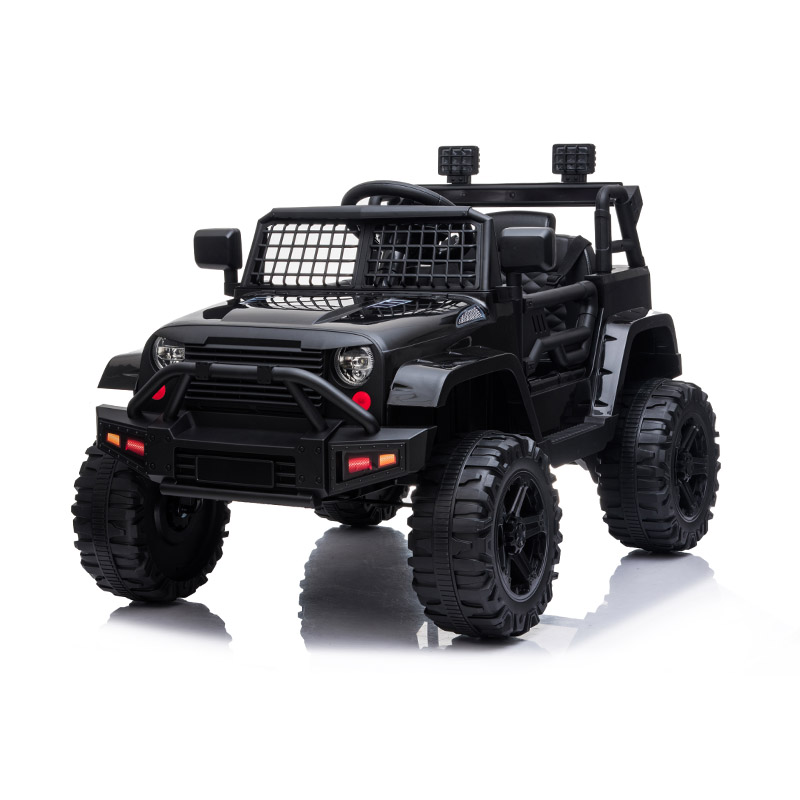
Choosing an electric ride-on vehicle for children involves more than finding an attractive design. Parents want a toy that is enjoyable, manageable, easy to operate, and suitable for their child's age and development. A 12V 2WD Kids Ride-On Jeep with RC & Lights brings together a recognizable off-road appearance, battery-powered driving, remote-control functionality, and lighting features in one exciting children's vehicle.
This guide explores how this type of ride-on Jeep works, what its key features mean in everyday use, how parents can evaluate its suitability, and how to maintain it for lasting enjoyment. It also introduces important considerations for retailers, distributors, and wholesalers sourcing children's electric ride-on toys.
What Is a 12V 2WD Kids Ride-On Jeep?
A 12V 2WD kids ride-on Jeep is a battery-powered miniature vehicle designed to let children experience basic driving in a controlled play environment. Inspired by the appearance of full-size off-road Jeeps, this type of toy combines a four-wheel vehicle structure with an electric power system and child-friendly driving controls.
The model featured in this guide, the 12V 2WD Kids Ride-On Jeep with RC & Lights, adds two practical features to the driving experience: remote-control functionality and lighting. These features help make the vehicle more interactive while giving parents another way to supervise younger drivers.
Unlike a traditional push car, an electric ride-on Jeep uses a rechargeable battery to power its motor. Children can operate the vehicle through its driving controls, while the remote-control function provides an additional control option for adults, subject to the actual remote-control configuration.
| Product Name | 12V 2WD Kids Ride-On Jeep with RC & Lights |
| Power System | 12V battery-powered system |
| Drive Type | 2WD (Two-Wheel Drive) |
| Control Feature | Remote control |
| Lighting | Lighting features |
| Available Colors | White, black, red, and pink |
| Product Dimensions | 102 × 58 × 30 cm |
| Net Weight | 15.3 kg |
| Gross Weight | 19.2 kg |
| Carton Volume | 0.18 CBM |
| 40HQ Loading Reference | 399 units |
Specifications are based on the listed product information. Confirm final configurations, packaging, and loading quantities with the supplier before ordering.
Its Jeep-inspired styling makes it attractive to children who enjoy pretend driving and outdoor adventures. For parents, the combination of a 12V power system and remote-control functionality provides practical features to consider when selecting an electric ride-on toy.
How Does the 12V Power System Work?
The battery is one of the most important components of an electric ride-on vehicle. In a 12V ride-on Jeep, the battery supplies electrical energy to the drive system, allowing the vehicle to move without manual pushing.
When a child operates the accelerator, the electrical system delivers power to the motor, which drives the wheels. Releasing the accelerator stops the acceleration input. The exact starting, stopping, and braking behavior depends on the vehicle's design and configuration.
Why Is a 12V System Worth Considering?
A 12V platform is a common configuration in children's battery-powered ride-on vehicles. It offers a practical category for families looking for an electric driving toy rather than a manually operated push vehicle.
Electric Operation
Children can experience powered driving without continuously pushing the vehicle with their feet.
Rechargeable Power
The battery can be recharged according to the manufacturer's instructions, supporting repeated play sessions.
Interactive Driving
Accelerator and steering controls introduce children to simple cause-and-effect driving actions.
Practical Toy Category
The 12V specification helps buyers compare similar battery-powered ride-on products.
Does a Higher Voltage Always Mean a Better Vehicle?
Not necessarily. Battery voltage alone does not determine whether a ride-on toy is suitable for a particular child. Motor configuration, vehicle weight, wheel design, speed settings, battery capacity, terrain, and safety features all influence actual performance.
Parents should evaluate the complete product rather than choosing a vehicle based only on its voltage rating. For younger children, controllability and appropriate operating conditions are particularly important.
How Does Two-Wheel Drive Affect Driving Performance?
The term 2WD stands for two-wheel drive. It means that two wheels receive driving power from the motor system, rather than all four wheels being powered as in a four-wheel-drive configuration.
For a children's ride-on Jeep, this distinction helps buyers understand the vehicle's basic drive structure. A 2WD design can be a practical configuration for ordinary play on suitable, relatively flat surfaces.
2WD and 4WD: Understanding the Difference
| Comparison | 2WD Ride-On Jeep | 4WD Ride-On Jeep |
|---|---|---|
| Powered Wheels | Two wheels | Four wheels |
| Drive Structure | Two-wheel drive system | Four-wheel drive system |
| Typical Positioning | Everyday recreational use | Models designed for additional traction capability |
| Buying Consideration | Evaluate surface suitability and motor configuration | Evaluate motor output and actual traction performance |
| Important Note | Not intended for every off-road surface | Four-wheel drive does not automatically guarantee safe off-road use |
What Surfaces Are Suitable for a 2WD Kids Jeep?
Surface conditions have a direct influence on how a ride-on vehicle performs. Smooth, firm, and relatively level surfaces are generally easier for children to navigate than loose, uneven, or slippery ground.
Suitable play areas may include:
- Flat private driveways with sufficient open space.
- Level outdoor patios with a suitable riding surface.
- Indoor play areas with enough clearance and no obstacles.
- Firm, smooth paths in designated private play areas.
Soft sand, deep grass, mud, steep slopes, and wet surfaces may reduce traction or affect control. A 2WD ride-on Jeep should not be treated as a full-size off-road vehicle.
How Does Remote Control Improve Parental Supervision?
Remote control is an important feature for families purchasing an electric ride-on toy, especially when children are still developing their coordination and understanding of basic driving movements.
With a compatible parental remote, an adult can operate the vehicle without requiring the child to manage every driving action independently. Depending on the actual control system, the remote may provide functions such as forward movement, reverse movement, steering, and stopping.
Three Practical Benefits of Remote Control
Young children may need time to understand the relationship between steering, acceleration, and direction. Parental remote control can help adults guide the vehicle while the child becomes familiar with its operation.
Parents can maintain an active role during play and respond when the vehicle approaches an obstacle or moves outside the intended play area, provided the remote supports the relevant function.
Remote operation can make it easier to introduce the vehicle to children who are not yet confident using the driving controls themselves.
Remote control should complement adult supervision, not replace it. Children still need a suitable play environment, appropriate protective equipment, and direct supervision during operation.
How Do Lights Make the Driving Experience More Engaging?
Lighting is more than a decorative detail on a children's ride-on Jeep. It helps create a more recognizable miniature vehicle appearance and makes pretend driving feel more realistic.
For children, illuminated vehicle features can make imaginative play more interesting. A Jeep-inspired ride-on toy with lights can encourage role-playing activities such as family trips, pretend road journeys, and outdoor adventure games.
What Should Buyers Consider About Lighting?
- Visual Appeal: Lighting adds an attractive detail to the vehicle's overall appearance.
- Interactive Play: Illuminated features can make the driving experience feel more engaging.
- Product Presentation: Lights can help differentiate a ride-on Jeep from simpler battery-powered toy cars.
- Electrical Quality: Buyers should check the stability of the lighting system and the quality of its wiring and connections.
It is important to distinguish decorative lights from safety equipment. Vehicle lighting does not make a ride-on toy suitable for public-road use or eliminate the need for adult supervision. Children should use the vehicle in designated play areas with adequate visibility.
How Can Parents Choose the Right Ride-On Jeep?
A visually attractive ride-on toy may catch a child's attention, but parents should consider several practical factors before making a purchase. The right vehicle should match the child's physical development, driving experience, and intended play environment.
1. Consider the Child's Age and Development
Always check the manufacturer's recommended age range, maximum user weight, seat dimensions, and vehicle specifications. Age alone is not enough to determine whether a child can use a particular model comfortably.
The child should be able to sit securely, understand basic instructions, and use the vehicle's controls with appropriate assistance.
2. Evaluate the Vehicle's Dimensions
Product dimensions influence storage, transportation, and the amount of space required during play. The featured Tusi Toys model measures 102 × 58 × 30 cm according to its product listing.
Parents should compare these dimensions with the available storage area and intended riding space before purchasing.
3. Check the Remote-Control System
Remote control is particularly useful for parents who want an additional way to guide younger drivers. Confirm whether the remote includes steering, speed selection, emergency stopping, or other functions rather than assuming these features are standard.
4. Look at Battery and Charging Requirements
Ask for the battery capacity, charging time, recommended charging procedure, and expected operating time under specified test conditions. Actual battery performance varies with the child's weight, terrain, temperature, driving habits, and battery condition.
5. Examine Construction and Safety Features
Check the seat structure, wheel assembly, steering response, electrical connections, charging port, and available restraint features. Review the manufacturer's age, weight, and safety instructions carefully.
- Is the vehicle suitable for the child's age and size?
- Does the seat provide a comfortable and secure position?
- Is the remote-control system easy for adults to operate?
- Are the battery and charger specifications clearly provided?
- Is the intended play surface appropriate for a 2WD vehicle?
- Are operating and maintenance instructions included?
How Should Children Use a Ride-On Jeep Safely?
Safe operation should always be a priority when introducing children to electric ride-on vehicles. Even though these toys are designed for recreational use, they contain powered moving components and require responsible adult supervision.
Prepare the Riding Area
Choose a private, open, and level area away from vehicle traffic, swimming pools, stairs, steep slopes, and other hazards. Remove objects that may obstruct the vehicle or create a tripping risk.
Teach Basic Driving Skills
Before allowing independent operation, show children how to use the accelerator, steering wheel, and stopping controls. Begin in an open area and let them become familiar with the vehicle at its lowest available speed setting, if equipped.
Use Appropriate Protective Equipment
Follow the manufacturer's protective-equipment recommendations. A properly fitted helmet and suitable footwear can help reduce the risk of injury during play. Avoid loose clothing that may become caught in moving parts.
Follow These Essential Safety Rules
- Never allow children to use the vehicle without adult supervision.
- Do not use the ride-on Jeep on public roads or near moving traffic.
- Avoid steep slopes, wet ground, and unsuitable off-road surfaces.
- Keep hands, feet, and clothing away from moving wheels and mechanical parts.
- Check the vehicle before each play session for visible damage or loose components.
- Do not exceed the manufacturer's recommended age or weight limits.
- Stop using the vehicle if the battery, wiring, motor, or controls show signs of malfunction.
These basic precautions help parents create a more controlled play environment while allowing children to enjoy the experience of driving their own miniature Jeep.
How Can You Maintain a 12V Electric Ride-On Jeep?
Regular maintenance helps keep an electric ride-on vehicle in good working condition. Parents do not need advanced mechanical knowledge to perform basic inspections, but they should follow the manufacturer's instructions for all electrical and mechanical components.
Battery Care
- Use only the charger specified or approved by the manufacturer.
- Charge the battery according to the recommended procedure.
- Avoid exposing the battery and charger to water or excessive heat.
- Disconnect the charger when the recommended charging cycle is complete.
- Follow the manufacturer's storage and maintenance instructions during long periods of inactivity.
Wheel and Body Inspection
Check the wheels, steering mechanism, body panels, and fastening points periodically. Remove dust and dirt with an appropriate soft cloth, and avoid spraying water directly onto electrical components.
Remote Control and Lighting Inspection
Check that the remote control responds correctly and that its batteries are in good condition. Inspect the lighting system and visible wiring for signs of damage. If the vehicle behaves unusually, stop using it until the problem has been identified.
Simple Maintenance Schedule
| Inspection Item | Recommended Timing | What to Check |
|---|---|---|
| Wheels and Steering | Before use | Loose parts, damage, and steering response |
| Battery | Regularly | Charging condition and visible damage |
| Remote Control | Before use | Battery condition and operating response |
| Lighting and Wiring | Regularly | Light operation and visible cable damage |
| Vehicle Body | After use | Cleanliness, cracks, and loose components |
Consistent inspections can help identify small problems before they affect the vehicle's normal operation.
What Should Buyers Check Before Purchasing in Bulk?
For importers, wholesalers, distributors, and toy retailers, selecting a suitable ride-on Jeep requires more than evaluating its appearance. Product consistency, packaging, supply capacity, quality control, and shipping efficiency all influence purchasing decisions.
1. Confirm Product Specifications
Request a complete specification sheet covering battery details, motor configuration, remote-control functions, lighting, dimensions, maximum user weight, and available colors. Confirm that the samples and final production units follow the agreed specifications.
2. Evaluate Packaging and Shipping Volume
Packaging dimensions and carton volume directly affect shipping costs and container utilization. The featured model has a listed carton volume of 0.18 CBM and a reference loading quantity of 399 units per 40HQ container.
These figures provide a starting point for logistics planning, but buyers should confirm the actual loading quantity according to packaging arrangements and container-loading conditions.
3. Review Quality Control Procedures
Ask the manufacturer about inspection procedures for batteries, motors, remote controls, lighting systems, plastic components, and assembled vehicles. Request relevant test reports and product documentation where applicable.
4. Check Compliance Requirements
Different destination markets may have different requirements for children's electric ride-on toys. Buyers should identify the applicable product safety standards, labeling requirements, battery transportation rules, and documentation before placing an order.
5. Discuss Customization and After-Sales Support
Depending on the supplier's capabilities, buyers may discuss color arrangements, packaging requirements, branding, spare parts, and after-sales service. Clarifying these details before production can reduce misunderstandings and help establish a more reliable supply relationship.
Why Consider Tusi Toys as Your Ride-On Toy Supplier?
Finding a dependable children's ride-on toy supplier is important for businesses that want to develop a stable product range and serve different retail markets. Product variety, manufacturing experience, specification communication, and delivery coordination are all worth evaluating when choosing a sourcing partner.
Tusi Toys provides a range of children's ride-on products, including battery-powered electric cars, Jeeps, UTVs, motorcycles, ATVs, and other ride-on toys. Its product collection includes different power configurations, designs, and feature combinations to meet varied market requirements.
The 12V 2WD Kids Ride-On Jeep with RC & Lights is one option for buyers seeking a Jeep-style electric ride-on vehicle with remote-control functionality and lighting features.
What Can Wholesale Buyers Discuss with Tusi Toys?
- Product Selection: Explore different ride-on vehicle categories and configurations.
- Color Options: Discuss available colors for the selected model.
- Product Specifications: Request detailed information about batteries, motors, dimensions, and control functions.
- Packaging and Logistics: Confirm carton details, loading references, and shipping arrangements.
- Order Requirements: Discuss quantities, delivery schedules, and relevant customization possibilities.
For businesses building a children's electric ride-on toy collection, working with a supplier that offers multiple product categories can make product sourcing and range planning more convenient.
Visit the Tusi Toys official website to explore its product range and learn more about available ride-on toy solutions.
Frequently Asked Questions
1. What Does 12V Mean on a Kids Ride-On Jeep?
12V refers to the nominal voltage of the vehicle's battery system. It supplies electrical power to the motor and other electrical components. Actual performance depends on battery capacity, motor configuration, vehicle weight, and operating conditions.
2. What Does 2WD Mean on an Electric Ride-On Jeep?
2WD means two-wheel drive. Two wheels receive driving power from the motor system. This configuration is commonly used for children's electric ride-on vehicles designed for suitable recreational surfaces.
3. Can Parents Control the Jeep with a Remote?
Yes, this model is listed with an RC feature. The actual remote-control functions should be confirmed with the supplier, including steering, forward and reverse operation, speed settings, and stopping functions.
4. Why Does a Kids Ride-On Jeep Need Lights?
Lights improve the vehicle's visual appeal and make pretend driving more engaging. They are a product feature rather than a replacement for proper protective equipment or adult supervision.
5. How Long Does a 12V Ride-On Jeep Battery Last?
Operating time depends on battery capacity, child weight, terrain, temperature, driving style, and battery condition. Check the manufacturer's tested operating-time information for the specific model instead of relying on a general estimate.
6. Can a 2WD Kids Jeep Drive on Grass?
Performance depends on grass length, ground firmness, moisture, wheel design, and motor configuration. Short, firm grass may be more manageable than deep or wet grass, but parents should follow the manufacturer's surface recommendations.
7. How Should I Charge a 12V Kids Electric Jeep?
Use the specified charger and follow the manufacturer's charging instructions. Avoid charging near water, exposing the battery to excessive heat, or using an incompatible power adapter.
8. What Colors Are Available for This Model?
The listed color options for the 12V 2WD Kids Ride-On Jeep with RC & Lights include white, black, red, and pink. Confirm current availability before ordering.
9. What Are the Dimensions of This Kids Ride-On Jeep?
The listed product dimensions are 102 × 58 × 30 cm. Buyers should confirm whether these measurements refer to the vehicle itself or another packaging specification when preparing storage and shipping plans.
10. Is This Model Suitable for Wholesale Orders?
The product listing provides carton volume and a 40HQ loading reference, making it possible for importers and distributors to begin evaluating shipping requirements. Minimum order quantities, pricing, lead times, and final shipping arrangements should be discussed directly with the supplier.
11. What Should I Check Before Buying a Ride-On Jeep for My Child?
Review the recommended age range, maximum user weight, seat dimensions, battery specifications, remote-control functions, safety instructions, and suitable riding surfaces. Adult supervision is essential during operation.
Looking for a Reliable Kids Ride-On Jeep Supplier?
A well-designed electric ride-on Jeep can bring together engaging play, convenient parental control, and attractive vehicle styling. Whether you are a distributor, importer, retailer, or brand owner, choosing the right product and manufacturing partner is an important step toward building a competitive children's toy collection.
Tusi Toys is ready to help you explore children's electric ride-on cars and discuss your sourcing requirements.
Contact us today to request product details, discuss wholesale opportunities, and find the right ride-on toy solutions for your market.
Contact Us