

How Does a Cargo Truck Support Refrigerated Body Installation for Cold Chain Logistics?
2026-11-17
A cold chain operator orders a refrigerated body and assumes that any Cargo Truck of the right payload can carry it. The body arrives, and the installer finds that the chassis frame rail width does not match the body mounting brackets, the rear axle is rated for less than the body plus payload, and the engine has no rear power take off for the reefer unit. The body sits in the workshop for two weeks while the chassis is modified. The delay and the modification cost more than the difference between a standard chassis and a cold chain chassis. This guide explains how a cargo truck supports refrigerated body installation, and what to check before the chassis is ordered.
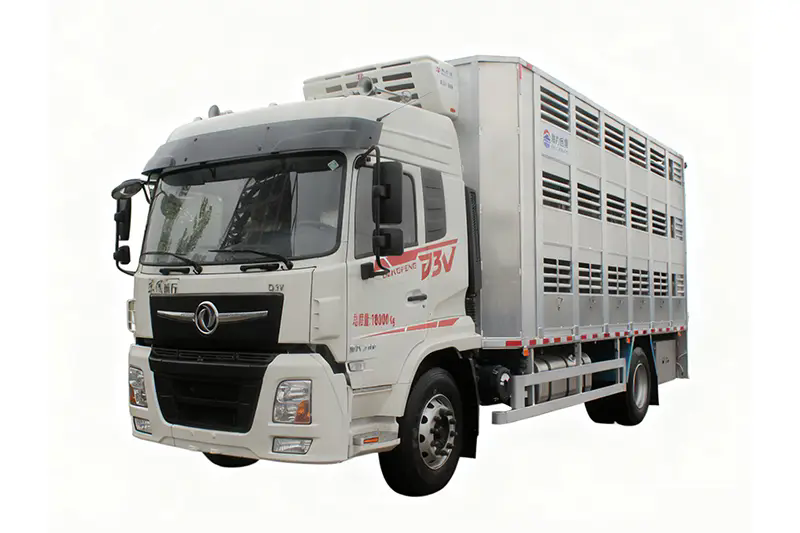
1. Why Does the Refrigerated Body Installation Have to Be Planned at the Chassis Order Stage?
The refrigerated body is not a simple box placed on a flatbed. It has an insulated floor, a metal sub frame, a door frame, a refrigeration unit, and a mounting system. The body adds weight that is distributed along the frame rails. The reefer unit may be mounted at the front of the body, on the roof, or under the body, and each position requires a different chassis layout. The power take off that drives the reefer compressor must be specified with the gearbox and the engine. In our factory, we review the body drawing and the reefer unit position before the chassis is ordered, and we confirm the frame rail width, the rear axle rating, the PTO option, and the electrical system. Hubei Runli Special Automobile Co., Ltd. has been building refrigerated trucks for over 12 years.
The chassis order stage is the point where the cost of change is lowest. A chassis that is ordered without the PTO option cannot be upgraded later without replacing the gearbox. A chassis that is ordered with the wrong frame rail width requires adapter brackets that add weight and reduce the mounting strength. A chassis that is ordered with the wrong rear axle rating cannot carry the body and the payload legally. Each of these problems is easier to prevent than to correct.
2. How Does the Chassis Frame and Axle Rating Carry the Body and the Payload?
The chassis frame must carry the weight of the body, the refrigeration unit, and the payload. The gross vehicle weight rating is the sum of the chassis weight, the body weight, and the payload. The rear axle rating must be greater than the load carried by the rear axle, which depends on the body length and the position of the payload. A short body places more load on the rear axle; a long body distributes the load more evenly. The frame rail width and the rail height must match the body sub frame so that the body sits flat and the mounting bolts align. The table below shows the typical chassis parameters for three cold chain applications.
| Application | Body length | Recommended rear axle rating | Frame rail width | PTO requirement |
| Urban delivery | 4.2 m | 5.5 to 7.0 t | 850 mm | Engine driven or electric standby |
| Regional distribution | 6.8 m | 9.0 to 11.0 t | 850 to 900 mm | Rear PTO from gearbox |
| Long haul | 9.6 m | 13.0 to 16.0 t | 900 to 950 mm | Rear PTO with engine management |
In our factory, we provide the chassis drawing and the body mounting drawing to the body builder before the body is fabricated. The two drawings are checked for the frame rail width, the mounting hole pattern, the rear axle position, and the clearance for the reefer unit. When the drawings match, the body is installed in one day instead of one week. Runli also confirms the rear axle rating against the actual body weight and the payload, not against a nominal figure.
3. How Does the Power Take Off and Electrical System Support the Reefer Unit?
The refrigeration unit needs a power source. There are three common options. The first is the engine driven PTO, which uses a gearbox PTO to drive a compressor through a belt or a shaft. The second is the vehicle engine driven alternator with a high output, which powers an electric reefer unit. The third is the standby electric motor, which plugs into shore power at the depot. The PTO option must be specified with the gearbox, and the engine must have the idle management function that raises the idle speed when the reefer is running. The electrical system must be rated for the reefer control and the body lighting. The table below compares the three options.
| Reefer power option | Typical capacity | Fuel consumption impact | Suitable application |
| Engine driven PTO | 5 to 15 kW | 0.8 to 2.0 liters per hour | Long haul, regional |
| High output alternator | 3 to 8 kW | 0.5 to 1.2 liters per hour | Urban delivery, multi drop |
| Electric standby motor | 3 to 10 kW | None while on shore power | Depot charging, night delivery |
Cold chain engineer's note: The most common installation error is ordering a Cargo Truck with a PTO that is too small for the reefer unit, or with no PTO at all. The body builder then installs a separate engine driven reefer, which adds weight and cost. In our factory, we ask for the reefer unit model and its power requirement before the chassis is ordered, and we confirm the PTO capacity with the gearbox supplier. Hubei Runli Special Automobile Co., Ltd. keeps a PTO compatibility list for the common reefer brands.
4. Why Does the Thermal Seal Between the Body and the Chassis Decide the Cold Chain Performance?
The refrigerated body is only as good as the seal around it. The floor of the body must be insulated, and the body sub frame must be isolated from the chassis frame with a thermal break, otherwise the chassis acts as a heat bridge and the body floor loses its insulation value. The rear door frame must seal against the body, and the door gasket must be compressed evenly. The reefer unit opening must be sealed to the body front wall, and the wiring and the refrigerant lines must pass through a sealed gland. In our factory, we use a high density polyethylene thermal break between the body and the chassis, and we seal the reefer opening with a closed cell gasket. We also check the door gasket compression with a feeler gauge before the truck is delivered. Our quality team photographs the thermal break and the sealed penetrations for the handover file. A body that is well insulated but poorly sealed will show a temperature rise at the floor and at the door, and the product will not meet the cold chain requirement.
The thermal seal is also a maintenance item. The door gasket compresses over time, and the thermal break can be damaged by a forklift. The operator should inspect the gasket and the break every month, and the body builder should provide a replacement gasket that matches the original profile. A gasket that is replaced with a different profile may not seal correctly.
5. How Should Buyers Specify and Verify a Refrigerated Cargo Truck Before Delivery?
The specification should include the chassis model, the rear axle rating, the frame rail width, the PTO option, the reefer unit model, the body length, the body insulation thickness, the door type, and the thermal break. The verification should include the following checks: the rear axle load calculation with the body and the payload, the PTO capacity check against the reefer requirement, the body mounting bolt torque, the door gasket compression, the thermal break installation, and the cooling test at the setpoint. Our factory performs the cooling test with the body empty and with the door closed, and we record the pull down time and the holding temperature. Hubei Runli Special Automobile Co., Ltd. provides the test record and the as built drawing with each truck.
We recommend that the buyer witness the cooling test and the door gasket check before the final payment. A truck that cools well in the workshop may still leak at the door if the gasket is not compressed evenly. The buyer should also verify that the reefer unit is the model that was specified, and that the PTO is the capacity that was ordered. A substitution at this stage is difficult to correct after the truck is in service.
Frequently Asked Questions About Refrigerated Body Installation on Cargo Trucks
Summary and Recommendation: A Cargo Truck supports refrigerated body installation through the chassis frame and axle rating, the PTO and electrical system for the reefer unit, and the thermal break and sealing details that protect the cold chain. The chassis must be ordered with the body and the reefer unit in mind, not selected from a standard stock list. The buyer should verify the rear axle load calculation, the PTO capacity, the door gasket compression, the thermal break installation, and the cooling test before delivery. When these items are checked at the order stage and at the handover stage, the body is installed in one day and the cold chain performance meets the requirement.