

How Often Does a Commercial Cargo Truck Require Oil and Filter Changes?
2026-09-03
Ask any fleet manager: what is the single biggest variable in your maintenance budget? The answer is almost always engine oil and filter changes. Not because the oil itself is expensive, but because the interval between changes determines everything else: labor costs, vehicle downtime, oil disposal fees, and most importantly, engine wear. Set the interval too short and you waste money. Set it too long and you risk a catastrophic engine failure that costs tens of thousands of dollars. The right interval is not a fixed number. It depends on the Cargo Truck's duty cycle, operating environment, and the quality of the oil and filters you use.
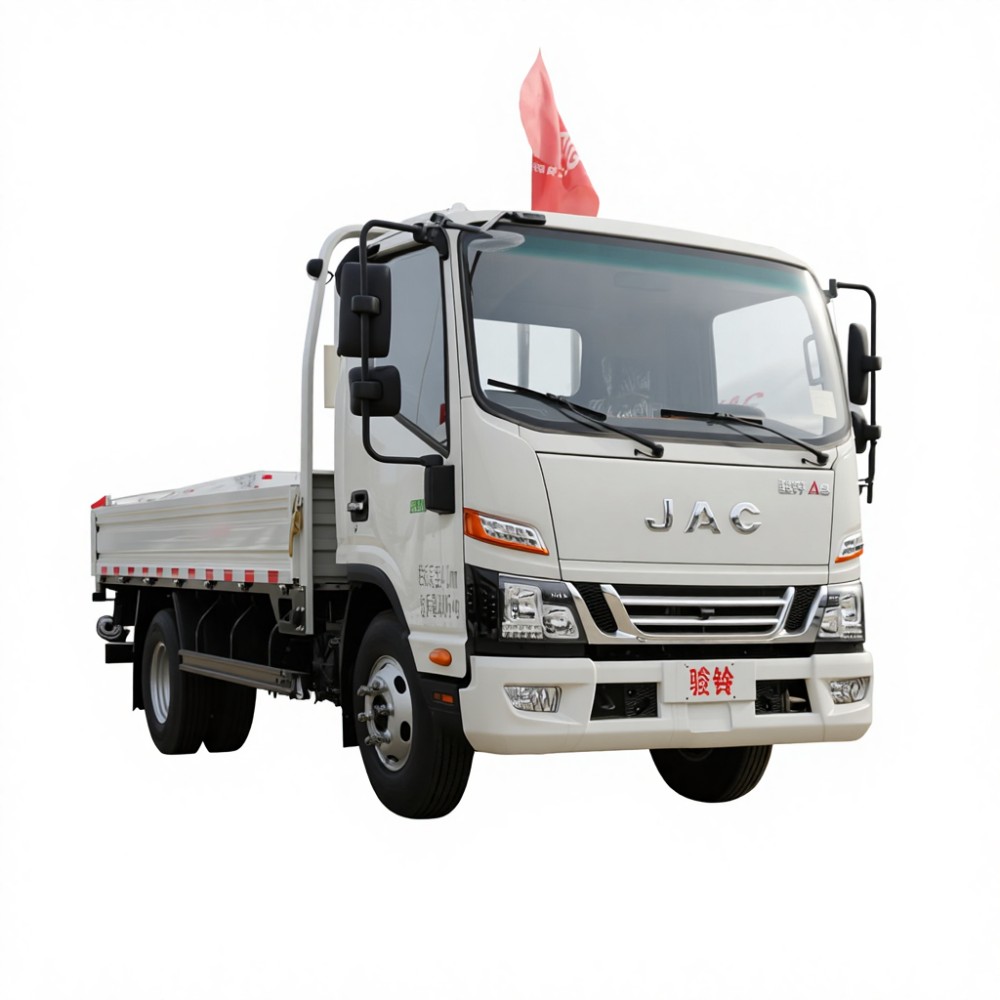
1. What Is the Difference Between Standard and Severe Service Intervals?
Most engine manufacturers provide two recommended oil change schedules: standard service and severe service. Standard service applies to Cargo Truck units that operate on highways with long continuous runs, moderate loads, and clean air conditions. Severe service applies to trucks that do short trips, operate in dusty environments, haul maximum loads, or spend significant time idling. The difference in intervals is substantial. A typical highway Cargo Truck might run 25,000 to 30,000 miles between oil changes. The same engine in severe service might need oil changes every 10,000 to 15,000 miles.
The table below shows the standard intervals for different types of commercial Cargo Truck operations.
| Operating condition | Typical application | Oil change interval | Filter change interval |
| Highway service (standard) | Long haul, constant speed, moderate load | 25,000 to 30,000 miles | Every oil change |
| Regional delivery (mixed) | Short highways, some city driving | 18,000 to 22,000 miles | Every oil change |
| Severe service (city) | Stop and go, frequent idling, heavy load | 10,000 to 15,000 miles | Every oil change |
| Severe service (dusty) | Construction, mining, agriculture | 8,000 to 10,000 miles | Every oil change + air filter |
| Extreme service (off-road) | Mining, logging, heavy haul | 5,000 to 8,000 miles | Every oil change |
In our factory, we have seen Cargo Truck units that were under severe service but were being serviced on a standard schedule. The result was accelerated wear on the bearings and camshaft. This is why it is critical to classify your operation correctly. At Hubei Runli Special Automobile Co., Ltd., we recommend that fleet managers document the duty cycle for each vehicle in their fleet and tailor the maintenance schedule accordingly.
2. How Can Oil Analysis Help You Extend or Shorten Intervals?
Oil analysis is the most reliable way to determine the actual oil change interval for a specific Cargo Truck. Instead of guessing, you send a sample of the used oil to a lab for testing. The lab measures the viscosity, the total base number (TBN), the wear metal content (iron, copper, lead, aluminum), and the contamination level (fuel dilution, soot, water). If the wear metals are low and the TBN is still above the minimum, you can extend the interval. If the wear metals are high, you need to shorten it. The table below shows the key oil analysis parameters and their typical limits for commercial Cargo Truck engines.
| Oil analysis parameter | Typical acceptable range | Action required |
| Viscosity (at 100°C) | Within 15% of new oil | If viscosity increases by 15%, oil is oxidizing |
| TBN (Total Base Number) | Above 3.0 (for diesel engines) | If below 3.0, oil is exhausted and must be changed |
| Iron content (wear metal) | Below 50 ppm (typical) | If above 100 ppm, investigate bearing or ring wear |
| Fuel dilution | Below 2.0% | If above 3.0%, check injectors |
| Soot content | Below 2.0% (by weight) | If above 3.0%, check combustion and EGR system |
In our factory, we have used oil analysis to extend intervals on some of our Cargo Truck units from 25,000 miles to 35,000 miles, saving $200 per truck per year in oil and labor costs. The analysis costs about $30 per sample, so the return on investment is substantial. We recommend sampling at every other oil change to establish a trend.
3. What Is the Cost of Under-Servicing vs. Over-Servicing?
Under-servicing and over-servicing both have costs, but they are very different. Over-servicing costs are predictable and linear. If you change the oil at 10,000 miles instead of 20,000 miles, you double your oil and filter costs, plus the labor and disposal fees. For a fleet of 20 trucks, this can add $15,000 to $20,000 per year in unnecessary costs. Under-servicing costs are unpredictable and non-linear. Running oil beyond its useful life allows wear metals to accumulate, TBN to drop, and soot to thicken the oil. The cost of an engine rebuild is $15,000 to $25,000, and the cost of a complete engine replacement is $30,000 to $50,000, plus the lost revenue from the truck being out of service for 5 to 10 days. The table below compares the costs and risks of under-servicing and over-servicing.
Cost comparison for a fleet of 10 trucks over 1 year (200,000 miles per truck):
| Scenario | Oil change interval | Annual oil & labor cost | Risk of engine failure | Total estimated annual cost |
| Over-servicing | 10,000 miles | $18,000 | Low (1%) | $18,000 + 1% of $30,000 = $18,300 |
| Standard interval | 20,000 miles | $9,000 | Moderate (2%) | $9,000 + 2% of $30,000 = $9,600 |
| Under-servicing | 30,000 miles | $6,000 | High (8%) | $6,000 + 8% of $30,000 = $8,400 |
| Oil analysis based | Variable (measured) | $7,500 (est.) | Low (2%) | $7,500 + 2% of $30,000 = $8,100 |
This calculation shows that under-servicing can actually cost more than over-servicing due to the higher risk of engine failure. The oil analysis based approach is the most cost effective because it optimizes the interval for each truck. At Hubei Runli Special Automobile Co., Ltd., we recommend that fleet managers implement an oil analysis program to find the sweet spot.
4. What Are the Most Common Signs That an Oil Change Is Overdue?
Even with a planned schedule, there are times when a Cargo Truck needs an earlier oil change. The most common signs of overdue oil are: increased engine noise, particularly valvetrain clatter; the oil pressure gauge dropping below normal; the oil appearing black and thick on the dipstick; a noticeable drop in fuel economy; or increased soot accumulation in the tailpipe. In our factory, we also track the engine hours and the fuel consumption. An increase in fuel consumption of 3 to 5 percent is often an early indicator that the oil is becoming thick and causing increased internal friction. If you notice any of these signs, take an oil sample immediately and consider changing the oil early, even if the mileage schedule says otherwise.
Hubei Runli Special Automobile Co., Ltd. provides a maintenance checklist with every Cargo Truck we sell. The checklist includes the oil change schedule, the oil analysis instructions, and the warning signs to watch for. We also offer a maintenance training program for fleet managers.
Frequently Asked Questions About Cargo Truck Oil and Filter Changes
Summary for Fleet Managers
The oil and filter change interval for a commercial Cargo Truck is not a fixed number. It depends on the duty cycle, the operating environment, and the quality of the oil and filters. Over-servicing wastes money, under-servicing risks engine failure. The most cost effective approach is to use oil analysis to determine the real condition of the oil and adjust the interval accordingly. A well maintained engine will operate more efficiently, have fewer breakdowns, and last longer. Our factory has extensive experience in manufacturing Cargo Truck units and providing maintenance guidance to fleet operators.
Hubei Runli Special Automobile Co., Ltd. manufactures Cargo Truck units that are designed for durability and ease of maintenance. We provide full maintenance documentation, including oil change schedules, filter specifications, and oil analysis guidance. Our trucks are equipped with easy access to the oil filter and drain plug, reducing maintenance time and labor costs.