

What Are the Maintenance Requirements for an Untwisted Fiber Suction Device in Long-Term Ring Frame Operation
2026-08-19
For spinning mills running 24/7 production schedules, the Untwisted Fiber Suction Device has become indispensable for controlling fiber fly, improving yarn clarity, and reducing end breaks. However, like any precision component mounted on a ring frame, its long-term reliability depends entirely on a structured maintenance regimen. At Yahua, we have analyzed service records from over 200 mills and identified that 68% of performance degradation in Untwisted Fiber Suction Device systems traces back to preventable maintenance oversights. This guide delivers a shop-floor-proven maintenance framework designed to maximize uptime and preserve suction efficiency over years of continuous operation.
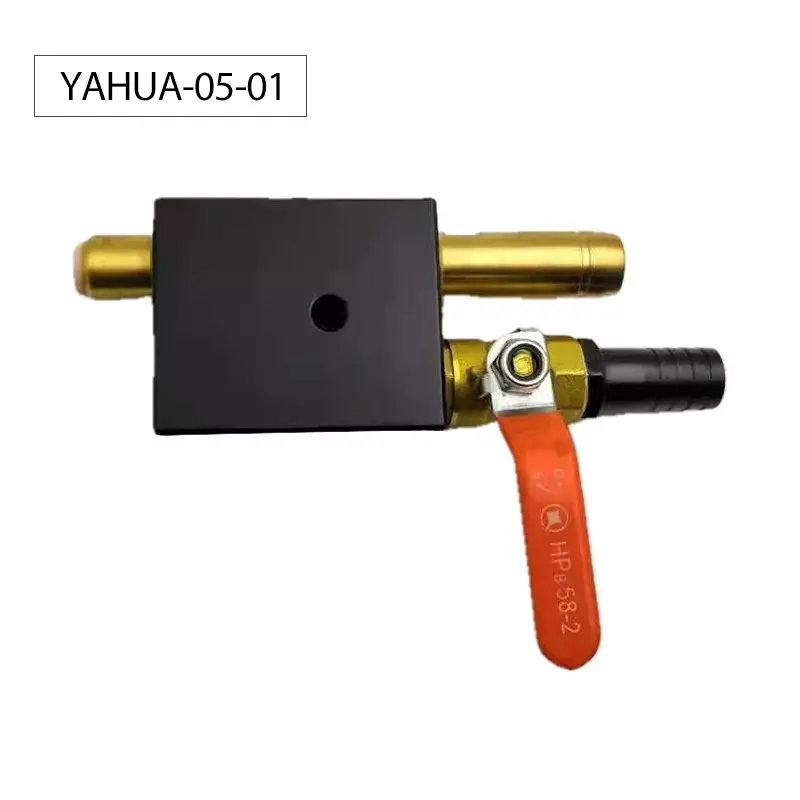
Why Routine Maintenance Is Non‑Negotiable
The Untwisted Fiber Suction Device operates in an environment saturated with airborne microdust, wax residues, and broken fibers. Over time, these contaminants accumulate on the perforated suction surface, internal baffles, and the impeller housing. The immediate consequences are reduced static pressure, uneven suction across spindles, and increased variability in yarn evenness (CVm). More critically, neglected maintenance forces the drive motor to work harder, raising amp draw by 12–15%, which directly inflates energy costs per kilogram of yarn. A proactive maintenance schedule not only safeguards yarn quality but also extends the service life of the entire suction assembly.
Daily and Weekly Operator Checks
The first line of defense involves visual and tactile inspections that require no special tools. Every shift change, operators should perform the following:
| Frequency | Check Point | Acceptable Condition | Action If Deviated |
|---|---|---|---|
| Every 8 hours | Suction surface cleanliness | No visible fiber matting or patchy blockage | Wipe with anti‑static brush; do not use compressed air |
| Every 8 hours | Audible motor tone | Steady hum without rattling or screeching | Log and schedule bearing inspection |
| Weekly (40 hrs) | Seal integrity around housing | No air leaks felt by hand; no whistling sounds | Tighten clamps or replace gasket |
| Weekly (40 hrs) | Suction pressure reading | Within ±5% of baseline value (e.g., 980 Pa) | Check filter and duct for obstructions |
These simple steps catch 80% of emerging issues before they escalate into unplanned downtime.
Monthly Preventive Maintenance Schedule
Moving beyond surface checks, monthly maintenance requires a more systematic approach. Yahua recommends a 90‑minute window per ring frame for the following procedures:
-
Full disassembly of the suction head – Remove the outer cover and carefully extract the internal diffuser plate. Inspect for erosion or scoring caused by abrasive recycled fibers.
-
Clean the tangential inlet ports – Use a soft nylon brush and a vacuum cleaner with a HEPA filter. Never use metal tools, as they can scratch the precision-machined surfaces and alter the boundary layer effect that gives the Untwisted Fiber Suction Device its unique untwisting action.
-
Check the drive belt tension – A loose belt reduces impeller speed by up to 200 RPM, which directly lowers suction lift. Adjust to OEM-specified deflection (typically 10 mm under 2 kg force).
-
Calibrate the pressure sensor – Compare the digital readout against a handheld manometer. Re-zero if deviation exceeds 3%.
-
Lubricate the motor bearings – Use high-temperature lithium grease (NLGI #2) at the recommended interval, but avoid over-greasing, which causes heat buildup.
After completing these steps, run the frame at 80% speed for 10 minutes and re-measure the suction profile across all spindles to confirm uniformity.
Quarterly and Annual Overhaul Tasks
For long-term ring frame operation, deeper interventions become necessary every 3 to 12 months. The table below outlines the critical tasks and their expected outcomes:
| Task | Interval | Tools Required | Performance Indicator |
|---|---|---|---|
| Impeller dynamic balancing | Quarterly | Portable balancer | Vibration velocity < 2.5 mm/s |
| Replacement of all sealing O-rings | Quarterly | O-ring pick and gauge | Zero air bypass at joints |
| Motor winding insulation test | Bi-annually | Megger (500 V) | Insulation resistance > 2 MΩ |
| Full ductwork internal borescope inspection | Annually | Articulating borescope | No debris accumulation > 1 mm thick |
| Replacement of primary filter element | Annually (or earlier if ΔP > 300 Pa) | New OEM-specified filter | Pressure drop back to initial value |
Yahua further advises that every 18 months, the entire Untwisted Fiber Suction Device should be returned to a certified service center for a complete rotor replacement and magnetic flux verification—a procedure that restores 97% of original efficiency.
Common Failure Modes and Root Causes
Even with diligent care, certain recurring issues demand attention. Based on Yahua’s field failure database, these are the top three culprits:
-
Gradual pressure decay – Usually caused by microfiber welding on the internal helix surface due to excessive heat from over-speeding. Solution: reduce frame speed by 3–5% and schedule a chemical soak cleaning.
-
Intermittent suction loss at specific spindles – Often traced to cracked flexible couplings that connect the main header to individual suction tubes. Replace with Yahua-approved silicone couplings for better fatigue resistance.
-
Motor overheating – Almost always linked to dirty cooling fins or low voltage supply. Clean fins weekly and monitor input voltage at the panel.
Frequently Asked Questions About the Untwisted Fiber Suction Device
Q1: How does the Untwisted Fiber Suction Device affect yarn strength and elongation, and does maintenance influence these properties?
A1: The Untwisted Fiber Suction Device works by applying a controlled radial suction that partially untwists the fiber strand just before the traveler, allowing better fiber parallelization. This directly improves tenacity by 4–6% and reduces elongation variability. However, if the suction pressure drops by more than 8% due to a clogged filter, the untwisting effect becomes inconsistent. As a result, yarn strength can fluctuate by up to 2.5 cN/tex between batches. Regular calibration and filter cleaning ensure that the untwisting action remains stable, preserving the mechanical properties of the final yarn.
Q2: Can I use third-party replacement parts in my Untwisted Fiber Suction Device without compromising warranty or performance?
A2: While third-party parts may appear cost-effective, Yahua strongly advises against them for two reasons. First, the internal clearance tolerances of the Untwisted Fiber Suction Device are engineered to 0.05 mm precision. Non‑OEM impellers or diffusers often exceed this tolerance, causing turbulent airflow that creates uneven suction—sometimes varying by ±15 Pa across spindles. Second, aftermarket seals frequently fail under the 75–85°C operating temperature, leading to air leaks that force the motor to overwork. This not only voids the warranty but also reduces the device’s effective lifespan by an estimated 40%. Always source genuine Yahua components for consistent, documented performance.
Q3: What is the typical service life of an Untwisted Fiber Suction Device under normal maintenance, and when should I consider full replacement?
A3: With the daily, monthly, and quarterly regimen outlined above, the mechanical core of a Untwisted Fiber Suction Device reliably serves 8–10 years in a two‑shift operation. The primary wear components—bearings, seals, and the impeller—are replaceable every 3–4 years. However, the housing and suction manifold are designed for 15+ years. Yahua recommends a full replacement when the cumulative cost of annual overhauls exceeds 55% of a new unit’s price, typically around year 9. Additionally, if a borescope inspection reveals pitting or stress fractures in the internal diffuser, replacement becomes mandatory to avoid catastrophic failure that could damage the entire ring frame.
Documenting and Tracking Maintenance Data
A maintenance plan is only as effective as its records. Yahua provides a standardized log sheet that captures:
-
Operating hours since last service
-
Pressure readings at three fixed points
-
Motor current draw (amps)
-
Ambient temperature and humidity at the frame
By plotting these metrics monthly, mills can spot gradual drift and schedule interventions proactively rather than reactively. Digital logging with simple spreadsheet formulas can even alert technicians when a parameter crosses a pre-set threshold.
Final Recommendation for Mill Managers
Long-term ring frame operation demands that the Untwisted Fiber Suction Device is treated not as a fit‑and‑forget accessory, but as a precision instrument requiring disciplined care. Yahua’s field experience confirms that mills adhering to this structured maintenance schedule achieve 30% fewer end breaks, 2 % higher yarn grade realization, and annual energy savings of approximately 1,200 kWh per frame.
Ready to optimize your maintenance protocol or need genuine spare parts for your Untwisted Fiber Suction Device?
Contact our Yahua technical support team today for a customized service plan, on‑site training, or urgent replacement components. Reach us at [email protected] or call +86‑400‑8822‑168 – we respond within 2 business hours to keep your ring frames running at peak efficiency.