

Which Features Make a Children's Electric Four-Wheel Drive Remote Control Car Reliable and Enjoyable?
2026-11-06
Choosing an electric ride-on vehicle for children involves more than looking at an attractive design. Parents want a safe, comfortable, and easy-to-operate vehicle, while distributors and retailers need products that offer consistent quality, practical functionality, and dependable market appeal.
A Children's Electric Four-wheel Drive Remote Control vehicle combines powered driving, four-wheel traction, and parental remote operation to create an engaging riding experience. However, not every model delivers the same level of performance. Understanding the key features helps buyers make informed purchasing decisions and identify products that meet their customers' expectations.
This guide explores the essential characteristics of children's electric four-wheel drive remote control vehicles, including drive systems, parental controls, battery performance, safety protection, construction materials, comfort, and maintenance. It also explains what wholesale buyers should evaluate when selecting products for different markets.
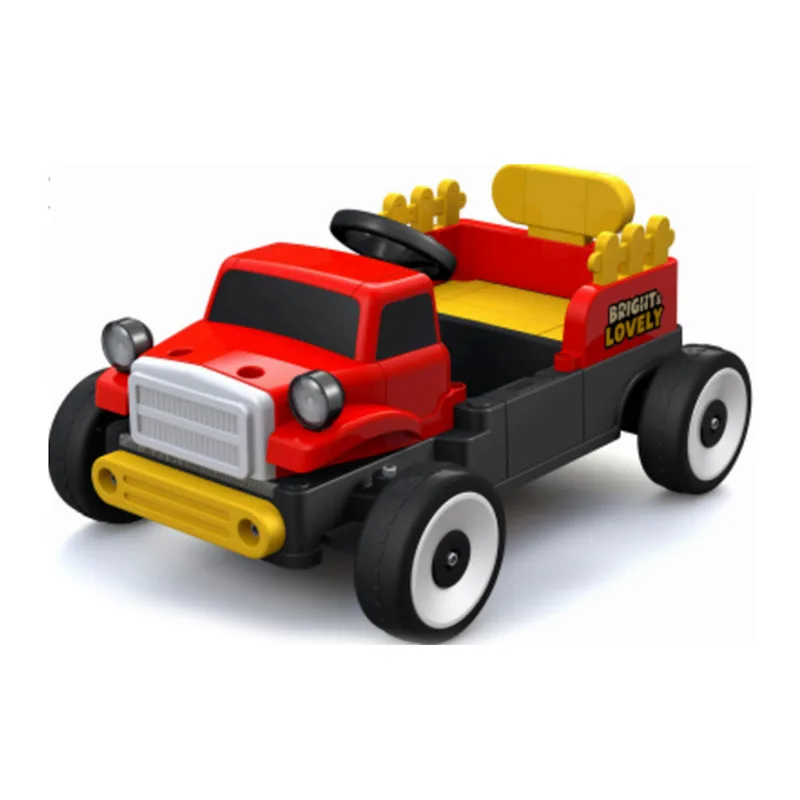
- Explore the basic structure and working principles of electric four-wheel drive ride-on cars.
- Understand the benefits of traction, motor configuration, and parental remote control.
- Identify safety, battery, and comfort features that influence purchasing decisions.
- Learn how distributors can evaluate product specifications and supplier reliability.
- Discover practical maintenance methods to improve product lifespan.
1. Understanding Children's Electric Four-Wheel Drive Vehicles
Children's electric ride-on vehicles are battery-powered toys designed to let young users experience basic driving activities in a controlled environment. They commonly feature a steering wheel, accelerator pedal, rechargeable battery, electric motors, and a seating area suitable for children.
A four-wheel drive configuration is designed to distribute driving power across all four wheels rather than relying on only two powered wheels. Depending on the model, this system may use four individual motors or another engineered transmission arrangement.
When combined with remote control functionality, the vehicle offers two operating methods: independent driving by the child and remote operation by an adult. This flexibility makes it attractive to families looking for interactive outdoor toys that allow parental supervision.
Common vehicle styles include:
- Electric SUVs: Larger body designs inspired by family utility vehicles.
- Electric off-road cars: Rugged styling, suitable for supervised riding on appropriate outdoor surfaces.
- Electric pickup trucks: Practical-looking designs with spacious seating and decorative cargo areas.
- Sports-style ride-on cars: Streamlined bodies designed to provide an exciting driving appearance.
The best configuration depends on the intended age group, riding environment, product specifications, and local market requirements.
2. How Four-Wheel Drive Improves Riding Performance
One of the main reasons buyers consider four-wheel drive models is their potential to provide better traction and power distribution. Since all four wheels can receive driving force, the vehicle may maintain more consistent movement on suitable surfaces compared with certain two-wheel drive designs.
Improved Traction on Suitable Surfaces
When a vehicle travels over grass, compacted ground, or slightly uneven terrain, traction becomes important. A four-wheel drive system can help distribute power more effectively, reducing the likelihood that one powered wheel will lose traction and prevent the vehicle from moving forward.
Nevertheless, four-wheel drive does not mean that a children's ride-on car can safely handle every type of terrain. Wet surfaces, steep slopes, loose gravel, and deep mud can still create dangerous conditions.
More Consistent Power Distribution
Depending on the motor arrangement and electronic control system, four-wheel drive can support smoother movement by supplying power to multiple wheels. This is particularly relevant when the vehicle carries a heavier load within its specified weight capacity.
Greater Design Flexibility
Four-wheel drive configurations allow manufacturers to develop different combinations of motor output, wheel size, suspension, and body structure. This provides more opportunities to adapt the vehicle to different product positioning and customer expectations.
3. Why Parental Remote Control Matters
Remote control functionality is one of the most important purchasing considerations for parents. Younger children may not yet have the coordination or judgment required to operate an electric vehicle independently. An adult-operated remote control provides another way to supervise the riding experience.
Adult-Controlled Driving
A parental remote control generally allows an adult to operate the vehicle without requiring the child to use the accelerator or steering wheel. Depending on the design, common functions include forward movement, reverse movement, steering, and emergency stopping.
Independent Driving Mode
As children become more familiar with the vehicle, they can gradually learn to operate basic controls themselves, provided their age, physical abilities, and the manufacturer's instructions permit it.
Emergency Stopping Function
Some models provide a dedicated remote-control stop function. This allows an adult to interrupt movement when necessary. Buyers should verify whether the function is available and understand how it operates before purchasing.
When comparing remote control systems, consider the following points:
- Is the remote control included with the vehicle?
- Does it support forward, reverse, and steering operations?
- Is an emergency stop function provided?
- Is the control response stable within the specified operating range?
- Can the remote control be paired and operated easily?
A practical remote control system improves usability while giving parents greater confidence during supervised riding.
4. Essential Safety Features to Consider
Safety should be a primary consideration when selecting any children's electric ride-on vehicle. Attractive styling and additional functions are valuable, but they should never replace appropriate safety engineering.
Seat Belt and Seating Design
A suitable seat belt helps keep the child properly positioned during operation. The seat should also provide adequate support and enough space for the intended user. Buyers should check belt design, fastening reliability, and seating dimensions.
Speed Control
Children's electric vehicles should have an appropriate maximum speed for their intended age group and product category. Some models provide different speed settings, allowing adults to select a suitable operating mode.
Stable Chassis and Wheel Structure
A well-designed chassis supports the vehicle's structure and helps maintain stability. Wheel spacing, center of gravity, body construction, and suspension design all influence handling characteristics.
Electrical Protection
Battery-powered vehicles should include suitable electrical protection measures. Depending on the design, these may include overcurrent protection, short-circuit protection, and battery charging safeguards.
Safety Standards and Testing
Importers and distributors should confirm which safety requirements apply in their destination markets. Relevant documentation may include product test reports, material information, electrical safety assessments, and applicable conformity documentation.
5. Battery Capacity and Driving Time
Battery performance directly influences how long a child can enjoy a ride before recharging is necessary. For parents, frequent charging can be inconvenient. For retailers, unclear battery specifications can lead to customer dissatisfaction.
Understanding Battery Specifications
Two common specifications are voltage (V) and capacity (Ah). Voltage relates to the electrical system's operating level, while ampere-hour capacity indicates the amount of electrical charge a battery can store.
However, battery capacity alone does not determine actual driving time. Motor power, vehicle weight, passenger load, terrain, temperature, and driving habits also affect energy consumption.
Factors That Influence Battery Life
- Driving conditions: Uneven surfaces and frequent acceleration may consume more energy.
- Passenger weight: Operating near the maximum rated load can increase motor demand.
- Battery condition: Aging batteries may gradually lose usable capacity.
- Charging habits: Following the manufacturer's charging instructions helps maintain battery performance.
- Temperature: Extremely hot or cold environments can affect battery behavior.
Battery Information Buyers Should Request
Before ordering, distributors should confirm battery voltage, capacity, charging time, expected operating duration under specified test conditions, charger compatibility, and battery replacement availability.
Reliable battery information makes product comparisons easier and helps sellers provide realistic expectations instead of promising unsupported driving times.
6. Motor Performance and Driving Experience
The motor system determines how effectively a children's electric vehicle converts electrical energy into movement. In four-wheel drive models, the motor arrangement is especially important because the output of multiple motors must work together to provide consistent driving behavior.
Motor Configuration
Many four-wheel drive ride-on vehicles use four electric motors, with one motor connected to each wheel. Other designs may use alternative mechanical arrangements. Buyers should confirm the actual configuration rather than assuming every product described as 4WD uses the same system.
Acceleration and Speed
Acceleration should be smooth and appropriate for the intended age group. Sudden starts can make the riding experience uncomfortable or difficult for younger children to control.
Maximum speed should be evaluated alongside the vehicle's weight, dimensions, braking performance, and safety features. A higher speed specification does not automatically indicate a better product.
Suspension and Wheel Design
Some models incorporate suspension systems to reduce the effect of minor surface irregularities. Tire material, tread pattern, and wheel diameter can also influence traction and riding comfort.
For buyers comparing models, it is useful to test acceleration, steering response, reversing, braking, and performance under the manufacturer's recommended operating conditions.
7. Comfort, Materials, and Product Durability
A children's electric car should be comfortable enough for regular supervised use and durable enough to withstand normal handling. Material quality and structural design influence both product appearance and long-term customer satisfaction.
Body Materials
Many ride-on vehicles use molded plastic components for their exterior bodies. The quality of the material, wall thickness, molding consistency, and component fit can influence resistance to everyday impacts and general wear.
Seat and Interior Design
Comfortable seating, accessible controls, and a suitable steering wheel make the vehicle easier to operate. Buyers should examine seat dimensions, foot space, pedal placement, and the accessibility of important controls.
Wheels and Suspension
Wheel materials should match the intended usage environment. EVA and plastic wheels are common options in this product category, while different tread patterns can affect grip and appearance.
Appearance and Additional Functions
Modern children's ride-on cars may include decorative headlights, music functions, USB connectivity, Bluetooth audio, dashboards, and realistic vehicle styling. These features can enhance product appeal, but buyers should verify that they function properly and do not compromise essential safety requirements.
Check body alignment, component connections, chassis strength, and overall assembly consistency.
Evaluate seat support, foot space, steering position, and ease of getting in and out.
Test switches, pedals, steering, remote controls, lights, and electronic functions.
Consider replacement parts, battery availability, maintenance requirements, and warranty support.
8. How to Choose the Right Vehicle for Different Age Groups
Not every children's electric vehicle is suitable for every child. Age, physical development, operating ability, and manufacturer recommendations should all be considered before selecting a model.
The following table provides a general purchasing reference. Actual suitability must always follow the specific manufacturer's age, height, weight, and safety specifications.
| Purchasing Factor | What to Evaluate | Why It Matters |
|---|---|---|
| Recommended age | Manufacturer's stated age range | Supports appropriate product selection |
| Maximum load | Rated passenger weight | Prevents overloading |
| Seat dimensions | Available seating space | Improves riding comfort |
| Control system | Pedal and remote operation | Supports supervised operation |
| Speed settings | Available speed modes | Helps match operating conditions |
| Vehicle dimensions | Length, width, and height | Ensures suitable storage and use |
For younger children, parental remote control and simple operating functions may be particularly important. Older children may appreciate additional driving functions, realistic styling, and a larger seating area.
Regardless of age, adults should review the instructions, inspect the vehicle before use, and supervise children throughout the riding experience.
9. What Wholesale Buyers Should Evaluate
For distributors, importers, retailers, and online sellers, selecting a children's electric four-wheel drive remote control product involves more than comparing retail prices. Product consistency, documentation, supplier communication, and after-sales support can significantly affect business performance.
Product Specifications and Customization
Request a complete specification sheet covering motor configuration, battery type, dimensions, maximum load, charging information, speed settings, remote control functions, and available colors.
If your market requires customized packaging, branding, or product configurations, clarify the manufacturer's customization capabilities before placing an order.
Quality Control
Ask how the supplier inspects incoming materials, electrical components, assembled vehicles, and finished products. A consistent inspection process can reduce the risk of defects and improve customer satisfaction.
Certifications and Market Compliance
Different countries and regions may have different requirements for children's electric ride-on products. Buyers should identify the applicable regulations and request relevant test reports and conformity documents before importing.
Packaging and Shipping
Because ride-on vehicles can contain large body components, packaging efficiency is an important consideration. Buyers should check carton dimensions, gross weight, protective packaging, assembly requirements, and shipping arrangements.
Supplier Communication and After-Sales Support
A reliable supplier should provide clear product information and communicate effectively regarding order specifications, production schedules, spare parts, warranty terms, and technical questions.
For bulk orders, buyers should also clarify minimum order quantities, sample availability, production lead times, payment terms, and inspection arrangements.
Wholesale Purchasing Checklist
- Confirm the actual four-wheel drive motor configuration.
- Review battery specifications and charging requirements.
- Check remote control functions and operating range.
- Request product samples when appropriate.
- Verify applicable product safety documentation.
- Evaluate material quality and assembly consistency.
- Confirm packaging, shipping, and delivery arrangements.
- Discuss warranty coverage and spare parts availability.
- Clarify customization options and minimum order quantities.
Buyers working with manufacturers and suppliers in China may also consider the supplier's manufacturing resources, export experience, communication efficiency, and ability to support repeat orders.
For supplier communication and business coordination, the location Hangzhou Bay New Economic Park, Port District, Jiaxing City, Zhejiang Province can be included in relevant company and sourcing information. Buyers should confirm the actual registered business and manufacturing address when evaluating a supplier.
10. Maintenance Tips for Long-Term Performance
Regular maintenance helps keep an electric ride-on vehicle in suitable operating condition. Although these products are designed for children's recreational use, they contain electrical and mechanical components that require attention.
Battery Care
- Use only the charger specified by the manufacturer.
- Follow the recommended charging procedure.
- Avoid exposing the battery to excessive heat or moisture.
- Inspect charging cables and connectors for visible damage.
- Store and maintain the battery according to the manufacturer's instructions.
Wheel and Mechanical Inspection
Check the wheels, steering components, fasteners, and suspension parts regularly. Loose connections, unusual noises, or damaged components should be inspected before the next use.
Cleaning and Storage
Remove dirt and dust using suitable cleaning methods. Avoid spraying water directly onto electrical connections, motors, battery compartments, or control units unless the product is specifically designed for that exposure.
When the vehicle is not being used, store it in a dry and appropriate environment. Follow the manufacturer's storage instructions to help preserve the battery and exterior materials.
Inspecting the Remote Control
Check the remote control's batteries, buttons, pairing status, and response. If the control becomes unreliable, stop using the vehicle until the issue has been identified and resolved.
11. Frequently Asked Questions
Four-wheel drive means that driving power can be delivered to all four wheels. Depending on the design, the system may use four separate motors or another power transmission configuration. Buyers should confirm the specific arrangement with the manufacturer.
It depends on the intended use. Four-wheel drive may offer improved traction and power distribution on suitable surfaces, while two-wheel drive models can be simpler and more economical. Product quality, safety, and the operating environment remain important considerations.
Many children's electric ride-on vehicles include parental remote control functionality. Depending on the model, adults may control steering, forward and reverse movement, and stopping. Always check the included functions and operating instructions.
Operating time depends on battery voltage and capacity, motor power, passenger weight, surface conditions, temperature, and driving habits. Buyers should request manufacturer test data under clearly defined operating conditions rather than relying on a general estimate.
Suitability varies by model. Parents should follow the manufacturer's recommended age range, maximum load, height requirements, and safety instructions. Adult supervision is essential.
Many models can be used outdoors on suitable, relatively even surfaces. However, not all vehicles are designed for rough terrain, steep slopes, wet grass, or muddy conditions. Check the manufacturer's operating recommendations before use.
Importers should review product specifications, motor configuration, battery performance, remote control functions, quality inspection procedures, safety documentation, packaging, minimum order quantities, and after-sales support.
Customization depends on the manufacturer's capabilities and order requirements. Potential options may include colors, packaging, branding, decorative features, and selected product configurations. Confirm available options, costs, and production lead times before ordering.
Regularly inspect the battery, charging system, wheels, steering, fasteners, remote control, and electrical connections. Clean the vehicle appropriately and follow the manufacturer's storage and maintenance instructions.
Reliable suppliers can help buyers maintain product consistency, obtain accurate specifications, coordinate production and delivery, and access technical assistance or replacement components when needed. These factors are particularly important for repeat orders and long-term distribution.
12. Final Thoughts: Making a More Confident Purchasing Decision
A children's electric four-wheel drive remote control vehicle brings together several important product elements: powered mobility, traction, adult supervision, battery performance, and child-friendly design. Choosing the right model requires evaluating how these features work together rather than focusing on appearance or a single specification.
For parents, the priorities should be age suitability, appropriate speed, reliable remote control, stable construction, and proper supervision. For distributors and wholesalers, additional considerations include product consistency, market compliance, customization, packaging, and dependable supplier support.
Taking the time to compare these factors can help buyers select products that meet real market needs and provide a better ownership experience. A well-designed electric ride-on vehicle should combine enjoyable functionality with practical safety and dependable performance.
Looking for a Reliable Children's Electric Four-Wheel Drive Remote Control Supplier?
Choosing the right product is only the first step. Finding a dependable business partner can make a significant difference to your sourcing and distribution operations.
Whether you are a wholesaler, importer, retailer, or distributor, understanding product specifications and customization options can help you make better purchasing decisions.
Contact us today to discuss your product requirements, request detailed specifications, and explore suitable solutions for your target market. Let's work together to develop a reliable and mutually beneficial business partnership.
Contact Us