
Which Standard Step-Deck Semi-Trailer Delivers Better Efficiency for Heavy Freight?
2026-10-21
In modern logistics, transporting tall machinery, construction equipment, and industrial materials requires more than a powerful tractor. The right trailer can improve loading efficiency, make better use of available cargo space, and help reduce transportation challenges. A Standard Step-Deck Semi-Trailer offers a practical solution through its two-level deck design, which provides additional vertical clearance for cargo that may be too tall for a conventional flatbed. For logistics companies, equipment manufacturers, and freight operators, choosing a suitable trailer is an important step toward safer and more efficient transportation. Shijiazhuang Jinfeng Special Vehicle Co., Ltd. provides specialized trailer solutions designed to meet different commercial transportation requirements.
What Makes a Standard Step-Deck Semi-Trailer Different?
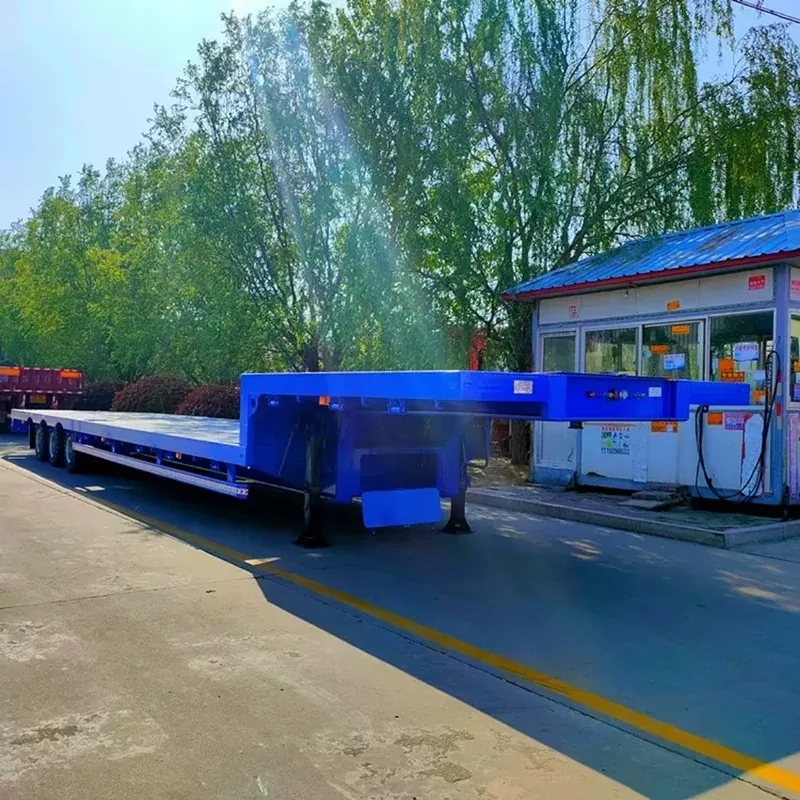
A Standard Step-Deck Semi-Trailer, also known as a drop-deck trailer, features a short upper deck and a longer, lower main deck. This stepped structure creates more vertical space for taller cargo without requiring the entire trailer to sit at an extremely low level.
Unlike a conventional flatbed trailer with one continuous loading surface, the step-deck configuration offers greater flexibility when transporting machinery and bulky industrial products. It is particularly useful when cargo height is a key consideration.
Key structural features may include:
-
Two-level deck design: Accommodates cargo of different heights and shapes.
-
Heavy-duty main frame: Supports demanding transportation tasks when properly specified.
-
Axle and suspension systems: Help distribute loads and maintain stable road performance.
-
Cargo securing points: Support the use of suitable chains, straps, and other restraint equipment.
-
Optional loading accessories: Ramps and other configurations can be selected according to loading requirements and trailer design.
Exact dimensions, payload capacity, materials, and available configurations vary by model and should be confirmed with the manufacturer.
Why Is a Step-Deck Trailer Important for Heavy Freight Transportation?
1. Greater Vertical Clearance
One of the main advantages of a Standard Step-Deck Semi-Trailer is its lower rear deck. Compared with a conventional flatbed of similar configuration, the lower loading surface can provide additional vertical clearance for tall machinery, large crates, and industrial components.
This can help operators transport certain loads while remaining within applicable overall vehicle-height limits. However, the actual allowable cargo height depends on deck dimensions, total loaded height, route regulations, and local transport requirements.
2. Improved Loading Flexibility
Industrial cargo often comes in irregular shapes and dimensions. The step-deck structure offers more options for positioning different types of freight, while suitable ramps or lifting equipment can simplify loading and unloading.
For businesses handling machinery, agricultural equipment, or construction materials, this flexibility can reduce unnecessary handling and support more efficient delivery operations.
3. Practical Transportation Costs
Selecting the right trailer can help businesses avoid paying for specialized equipment they do not need. When the cargo fits within a step-deck trailer's rated capacity and dimensional limits, operators may benefit from a practical balance between loading height, carrying capability, and operational flexibility.
The final cost advantage depends on freight dimensions, cargo weight, route conditions, fuel consumption, loading methods, and permit requirements.
Where Can a Standard Step-Deck Semi-Trailer Be Used?
The versatility of a Standard Step-Deck Semi-Trailer makes it suitable for a range of commercial transportation applications.
| Industry | Typical Cargo | Main Benefit |
|---|---|---|
| Construction | Compact excavators, loaders, building equipment | Additional vertical clearance |
| Agriculture | Tractors, harvesters, agricultural machinery | Flexible equipment transportation |
| Industrial manufacturing | Generators, production machinery, metal components | Adaptability to bulky cargo |
| Energy projects | Selected equipment and industrial components | Practical transport for project freight |
| General logistics | Tall crates, packaged machinery, oversized items | Flexible loading arrangements |
The most suitable application depends on the trailer's technical specifications, cargo distribution, loading method, and applicable road regulations.
How to Choose the Right Standard Step-Deck Semi-Trailer
Choosing a trailer based only on its purchase price may lead to unnecessary operating costs later. Buyers should evaluate their actual transportation requirements before making a decision.
Consider these essential factors:
-
Payload capacity: Confirm that the rated capacity can accommodate the cargo's weight and load distribution.
-
Deck dimensions: Check the upper and lower deck lengths, width, and height against the cargo's measurements.
-
Axle configuration: Select an appropriate arrangement based on the intended payload and applicable axle-load limits.
-
Suspension and braking: Evaluate the systems according to road conditions, operating frequency, and safety requirements.
-
Loading and securing equipment: Determine whether ramps, winches, stake pockets, or additional securing points are needed.
-
Maintenance and durability: Consider structural quality, component availability, and long-term maintenance requirements.
Before purchasing, buyers should also verify the tractor compatibility, turning requirements, overall loaded height, and transport regulations in their target market.
Standard Step-Deck Semi-Trailer vs. Flatbed and Lowboy Trailers
Different trailer designs solve different transportation problems. Understanding their differences helps buyers avoid choosing equipment that is either insufficient or unnecessarily specialized.
| Feature | Flatbed Trailer | Standard Step-Deck Semi-Trailer | Lowboy Trailer |
|---|---|---|---|
| Deck structure | Single level | Two levels | Very low loading deck or well |
| Height clearance | Standard | Increased on the lower deck | Generally greatest |
| Typical applications | General freight and materials | Tall machinery and bulky cargo | Very tall or heavy equipment |
| Loading approach | Crane or forklift, depending on cargo | Crane, forklift, or suitable ramps | Depends on configuration |
| Best selection criterion | General cargo compatibility | Balance of height clearance and versatility | Specialized heavy-haul requirements |
A step-deck trailer is often a practical middle option when a flatbed cannot provide sufficient height clearance but a lowboy is not necessary. Final selection should always be based on actual cargo specifications and route requirements.
Why Consider Shijiazhuang Jinfeng Special Vehicle Co., Ltd.?
When sourcing a Standard Step-Deck Semi-Trailer, buyers need to consider more than the trailer's appearance. Product specifications, configuration options, intended operating conditions, and communication with the supplier all contribute to a successful purchasing decision.
Shijiazhuang Jinfeng Special Vehicle Co., Ltd. is a supplier to consider when evaluating specialized semi-trailer solutions. Buyers can discuss their cargo dimensions, transportation scenarios, required payload, and market-specific requirements to identify a suitable configuration.
Before placing an order, request detailed technical specifications and confirm the available options, manufacturing details, delivery arrangements, and applicable compliance documentation. Clear communication at the quotation stage helps align the trailer configuration with real operating needs.
Conclusion
A Standard Step-Deck Semi-Trailer offers a valuable combination of additional cargo-height clearance, flexible loading arrangements, and practical versatility. It can support transportation operations across construction, agriculture, industrial manufacturing, and general logistics when the trailer is properly matched to the cargo.
The key to a successful investment is choosing a configuration that meets payload, dimensional, safety, and regulatory requirements while supporting long-term operational efficiency.
Looking for a suitable trailer for your transportation business? Contact us at Shijiazhuang Jinfeng Special Vehicle Co., Ltd. to discuss your cargo requirements, explore available Standard Step-Deck Semi-Trailer configurations, and find a practical solution for your freight transportation needs.