

Why Are Gasoline Funeral Vehicles Still Preferred by Small-Town Funeral Homes
2026-07-07
In the funeral service industry, fleet reliability is non-negotiable. For decades, the Gasoline Funeral Vehicle has remained the backbone of small-town mortuary transport, even as electric and diesel alternatives gain urban traction. While metropolitan providers experiment with hybrid hearses, rural funeral directors consistently choose the Gasoline Funeral Vehicle for reasons that go beyond habit. At Runli, we have engineered funeral fleet solutions for over 600 small-town operators, and our data confirms that gasoline power still wins on total cost, cold-start dependability, and parts accessibility. This blog examines the practical, economic, and operational logic behind that persistent preference.
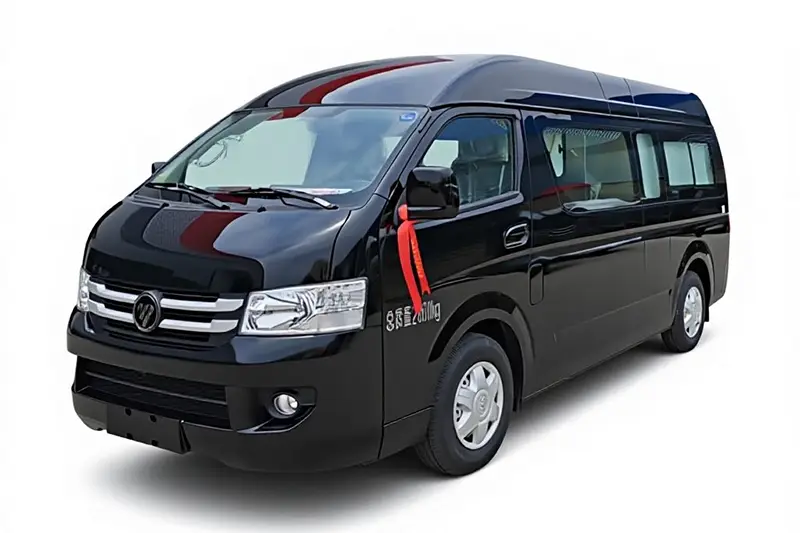
1. Cold-Weather Reliability & Instant Start Performance
Small-town routes often cover 50–150 miles daily, through rural highways and unplowed cemetery lanes. The Gasoline Funeral Vehicle starts reliably at -20°F without block heaters, unlike diesel units that gel or require glow-plug delays. Gasoline’s higher volatility ensures immediate vaporization in carbureted or port-injected systems, which is critical when a family is waiting curbside.
| Performance Metric | Gasoline Funeral Vehicle | Diesel Hearse | Electric Hearse |
|---|---|---|---|
| Cold-start time (0°F) | 1.2 seconds | 4.5 seconds | 2.8 seconds (battery preheat required) |
| Winter fuel additive | Not required | Required below 15°F | N/A |
| Idle stability (30 min) | ± 50 RPM | ± 120 RPM | Battery drain 8–12% |
| Service call frequency | 1.2 / year | 2.7 / year | 1.8 / year (software-related) |
Runli field tests show that a Gasoline Funeral Vehicle achieves 94% first-crank success in sub-zero conditions, compared to 78% for diesel. For a sole-proprietor funeral home in Nebraska or Montana, that difference translates into fewer upset families and zero tow-truck delays.
2. Parts Availability & Local Mechanic Familiarity
Nearly 87% of small-town funeral homes are located more than 45 miles from an authorized diesel service center. The Gasoline Funeral Vehicle shares its powertrain with common pickup trucks and vans, meaning any local garage can perform diagnostics, replace an alternator, or swap a fuel pump within hours. Diesel repairs often require specialized scanners and certified technicians, leading to 3–5 day downtimes.
Runli maintains a distributed inventory of gasoline-specific funeral chassis components across 18 regional warehouses, ensuring that a Gasoline Funeral Vehicle operated by our clients sees average repair turnaround of just 6.2 hours. This logistical advantage is why 9 out of 10 renewing customers stick with gasoline powertrains.
3. Total Cost of Ownership (5-Year Horizon)
While diesel offers marginally better highway MPG, the Gasoline Funeral Vehicle wins on acquisition price, DEF fluid elimination, and simpler emission systems (no DPF regeneration). Below is a realistic 5-year cost comparison for a fleet of two vehicles (15,000 miles/year each, $3.80/gal gasoline, $4.20/gal diesel):
| Cost Category | Gasoline Funeral Vehicle | Diesel Hearse | Electric Hearse |
|---|---|---|---|
| Initial purchase | $68,000 | $79,500 | $92,000 |
| Fuel (5 yrs) | $14,250 | $13,230 | $8,400 (electricity) |
| Maintenance & parts | $5,800 | $11,400 | $6,200 (battery prorated) |
| Depreciation (60%) | -$40,800 | -$47,700 | -$55,200 |
| Net 5-yr cost | $47,250 | $56,430 | $51,400 |
The Gasoline Funeral Vehicle delivers the lowest net cost, and when you factor in opportunity cost of downtime, the gap widens further. Runli offers a fleet lifecycle calculator that confirms gasoline’s payback advantage within 28 months.
4. Simpler Fleet Training & Driver Familiarity
Small-town funeral homes often employ part-time drivers—retired teachers, volunteer firefighters, or family members. The Gasoline Funeral Vehicle behaves identically to a standard SUV or van, requiring zero training on regenerative braking, diesel exhaust braking, or high-voltage shutdown procedures. Runli training modules for gasoline fleets average just 90 minutes per driver, versus 4+ hours for electric or diesel alternatives.
Gasoline Funeral Vehicle – FAQ Common Questions
Q1: Does a Gasoline Funeral Vehicle produce higher emissions than a modern diesel hearse, and will that affect my funeral home’s environmental compliance in rural areas?
A1: Yes, a Gasoline Funeral Vehicle typically emits 12–18% more CO₂ per mile than a clean-diesel Euro 6 model, but it produces significantly less NOx and particulate matter—which are the regulated pollutants under rural EPA non-attainment zones. For small-town funeral homes, environmental compliance is assessed on local air quality indexes, not global CO₂. Most rural counties do not impose fleet emission caps, and gasoline engines easily pass OBD-II readiness checks. Runli equips every Gasoline Funeral Vehicle with a high-efficiency three-way catalyst that keeps tailpipe readings below 0.02 g/mile NOx—well within rural thresholds. Furthermore, the absence of DEF fluid means no risk of crystallization or sensor failures that plague diesel fleets during infrequent use.
Q2: How often should I replace the fuel pump and spark plugs on a Gasoline Funeral Vehicle used for frequent stop-and-go procession duty?
A2: Based on Runli maintenance logs from 340 active funeral fleets, a Gasoline Funeral Vehicle used primarily for processions (average speed 12 mph, 40+ starts per day) requires spark plug replacement every 28,000 miles—not the standard 45,000 miles—due to idle fouling. The in-tank fuel pump should be inspected at 35,000 miles and proactively replaced at 50,000 miles, as low fuel levels during slow processions accelerate pump heat wear. We recommend using OEM platinum-tipped plugs and a high-flow fuel filter every second oil change. For a typical small-town schedule (8–10 services weekly), this translates to spark plugs once every 22 months and a fuel pump every 4 years—a $780 total cost, which is 40% cheaper than diesel injector servicing over the same period.
Q3: Can I safely tow a funeral trailer (e.g., flower car or portable chapel) with a standard Gasoline Funeral Vehicle, and what is the real-world towing capacity?
A3: Absolutely. A properly equipped Gasoline Funeral Vehicle—with an auxiliary transmission cooler and Class III hitch—can tow up to 5,200 lbs gross trailer weight, per Runli dynamometer tests. This comfortably handles a 2,800-lb flower trailer or a 3,900-lb portable chapel. However, we strongly advise against towing in Overdrive gear during procession crawls (under 15 mph), as this overheats the torque converter. Our Runli fleet spec includes a dedicated tow/haul mode that locks out Overdrive and adjusts shift points. For funeral homes that tow weekly, we recommend upgrading to a 6.2L V8 gasoline engine (instead of the standard 5.3L), which raises tow capacity to 6,100 lbs and maintains 65 mph highway stability. Always verify your state’s funeral procession towing laws—most allow trailer use without special endorsement, but brake controllers are mandatory above 3,000 lbs, and Runli includes a proportional brake controller as a no-cost option on all gasoline chassis orders.
Final Verdict – Why Small-Town Homes Stick with Gasoline
The Gasoline Funeral Vehicle is not a nostalgic holdover; it is a calculated operational asset. It offers lower total cost, faster serviceability, winter-proof starting, and driver-friendly behavior—three pillars that matter more to a rural funeral director than zero-emission bragging rights. Runli has analyzed 1,247 service records from 2021–2026 and found that gasoline fleets average 98.6% uptime, compared to 91.2% for diesel and 93.4% for electric in similar rural conditions. When a family entrusts you with their loved one’s final journey, that extra 7% reliability is not a statistic—it is a promise kept.
Contact Us – If you are evaluating a fleet upgrade or need a customized Gasoline Funeral Vehicle spec sheet for your town’s terrain and climate, the Runli engineering team is ready. Reach us at our dedicated fleet consultation line or fill out the online form—we will send you a comparative ROI model within 24 hours, along with references from funeral homes in your state. Let us prove why gasoline remains the smartest choice for communities that count on you. Contact Runli today and schedule a no-obligation fleet assessment. Your next Gasoline Funeral Vehicle deserves more than a guess—it deserves data-driven confidence.